Back to home
Algorithms & Theory

Computation

Physics-informed machine learning and neural rendering for inverse problems, differentiable physics, dynamic inference, and scientific simulation.

We design computational models that bridge inverse problems, machine learning, and differentiable physics to reveal hidden structure and dynamics from complex sensor observations

Differentiable Physics

Differentiable Physics

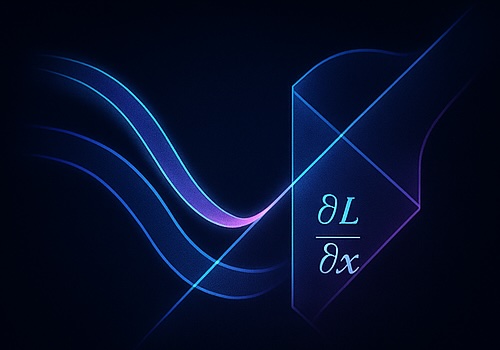
Differentiable physics enables computing gradients through the entire sensing pipeline — from the imaging system to the physical processes that generate the observations, including light–matter interactions, scene dynamics, and even the curvature of space-time.
Neural Reconstruction

Neural Reconstruction

Neural representations offer a powerful way to model high-dimensional continuous fields. We develop neural representations, with physics-guided inductive biases, for reconstructing the stucture and dynamics of physical fields and instrument behavior from sparse or indirect observations.

Data-Driven Dynamics

Data-Driven Dynamics

Learning dynamical systems and temporal evolution directly from sparse, noisy, or indirect data using models that capture multi-scale physical processes and underlying latent structure.

Surrogate Simulations

Surrogate Simulations

Learning fast, differentiable surrogates for expensive physical simulations, enabling rapid scientific modeling, inference, and exploration across complex physical systems.